JUL · 11 · 2026
Travel Trailer Wood Rot: Why It Happens and How to Prevent It
Travel trailer wood rot happens when water reaches the wooden frame, floor, or wall structure hidden inside a trailer and stays there — the wood swells, softens, and rots, often for years before you can see it. It is the single most common reason a travel trailer gets scrapped, and on a wood-framed camper it is a question of when, not if. The only sure way to avoid it is to own a trailer with no wood to rot.
Why travel trailers rot
Most travel trailers are built like a small house on wheels: a wooden frame wrapped in panels, with wood in the floor and roof decking. That works until water gets in — and on a vehicle that flexes down the highway and bakes in the sun, seals eventually fail. The usual entry points are roof seams, the areas around vents and the air conditioner, window and door frames, and the roof edges. Once moisture reaches the wood and cannot dry out, rot and wood mildew set in.
The cruel part is that it stays hidden. By the time you notice a soft floor, a spongy wall, a musty smell, or a stain on the ceiling, the damage has usually been spreading for months or even years.
Warning signs of wood rot
- Soft or springy spots in the floor, especially near the door and slide-outs.
- Spongy or bulging walls, or exterior panels that ripple, bubble, or delaminate.
- A musty, damp smell inside — often the first clue, and a sign of wood mildew.
- Water stains on the ceiling or walls, or around windows and vents.
- Soft window and door frames, or trim that no longer holds screws.
What wood-rot repair costs
Repairing structural wood rot is one of the most expensive fixes in the RV world, because the rotted wood is buried behind finished surfaces. A localized soft-floor repair can run several hundred to a few thousand dollars; widespread frame or wall rot often costs more than the trailer is worth, which is why so many rotted campers are simply scrapped. Rot also drags down resale value — buyers and inspectors look for it first.
How to prevent wood rot
On a wood-framed trailer, prevention is an ongoing chore: inspect and reseal the roof and every seam at least once a year, fix leaks the moment you spot them, and keep the trailer covered and ventilated. Even then, one missed leak can undo years of upkeep.
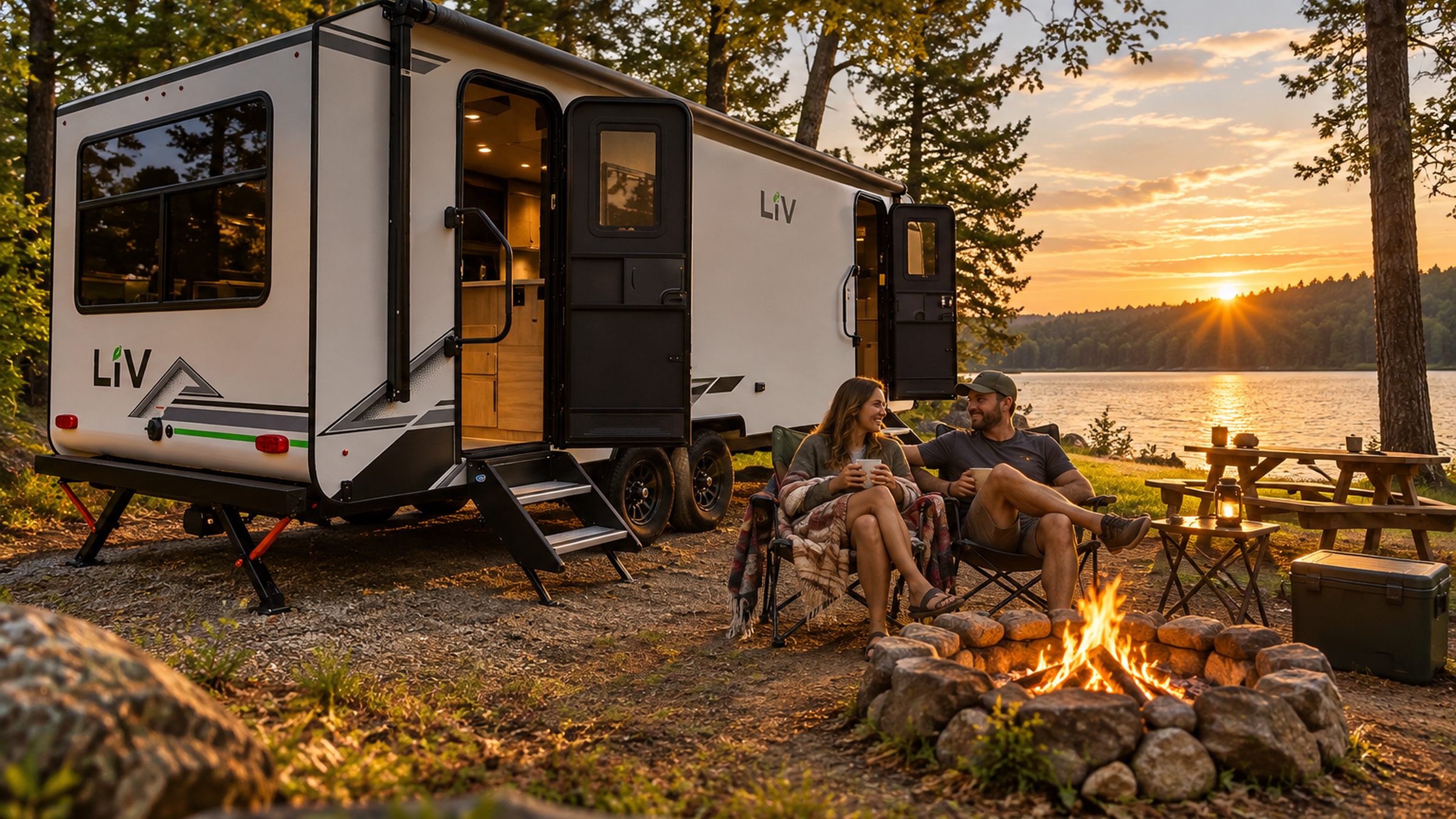
The permanent fix is to remove the wood entirely. Every LiV is built from 100% thermoplastic composite instead of a wood frame, and the shell is welded into one seamless piece — no seams to leak and no wood to rot. There is nothing inside the structure for water to damage, so there is no annual roof reseal and no clock ticking on hidden rot.
That is why every LiV carries a lifetime warranty against wood rot and wood mildew, backed by a 10-year structural warranty. Want to see how the shell is made? Read how a LiV is built, or compare the materials in wood vs composite travel trailers.
Frequently asked questions
Can wood rot in a travel trailer be fixed?
Minor rot caught early can be repaired by cutting out the affected wood and rebuilding the area, usually for several hundred to a few thousand dollars. Widespread structural rot often costs more than the trailer is worth. The problem also tends to return, because the underlying wood construction and the leak paths are still there.
Do all travel trailers have wood in them?
Most do — traditional travel trailers use a wood frame, wood floor decking, and wood roof decking. LiV is the exception: every LiV is built from 100% thermoplastic composite with no wood in the structure, so it cannot rot.
How do I know if a used trailer has wood rot?
Walk the floor for soft spots, press on the walls for sponginess, smell for musty odors (a sign of wood mildew), and check ceilings, windows, vents, and roof edges for stains or soft trim. When in doubt, have it inspected — rot is often hidden until it is severe.
Does a composite travel trailer really never rot?
Correct — there is no wood in the LiV structure to rot. The 100% thermoplastic composite shell does not absorb water or support wood mildew the way a wood frame does, which is why LiV backs it with a lifetime warranty against wood rot and wood mildew.