JUL · 11 · 2026
Travel Trailer vs. Truck Camper: Which Is Right for You?
The main difference is simple: a travel trailer tows behind your vehicle on its own axles, while a truck camper loads into the bed of a pickup and rides with the truck. A travel trailer gives you more living space and lets you unhitch at camp; a truck camper is more compact and can go almost anywhere your truck can. LiV builds both, so the right choice comes down to your vehicle and how you travel.
Travel trailer vs. truck camper at a glance
| Travel trailer | Truck camper | |
|---|---|---|
| How it travels | Tows behind your vehicle | Rides in a pickup bed |
| Tow vehicle | Many SUVs, crossovers & trucks (by weight) | A pickup truck |
| Living space | More — sleeps up to 8 on larger floorplans | Compact — typically sleeps 2–4 |
| At camp | Unhitch and keep your vehicle free | Stays on the truck |
| Access | Great for most campgrounds & trails | Best for tight, remote, or rugged spots |
| LiV models | 13-series up to the 26 RBS | OFF ROAD 129 & 159 |
When a travel trailer makes sense
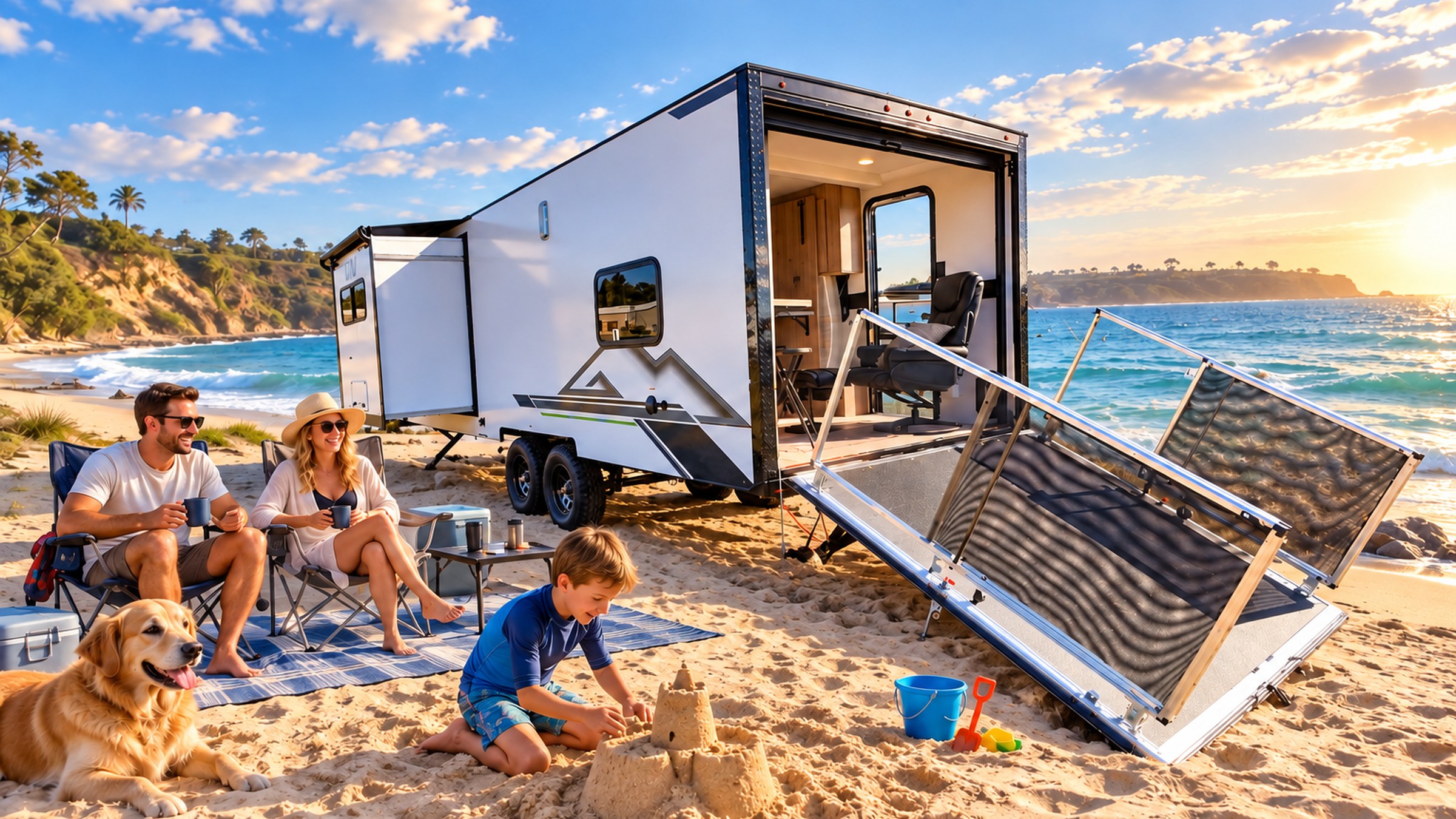
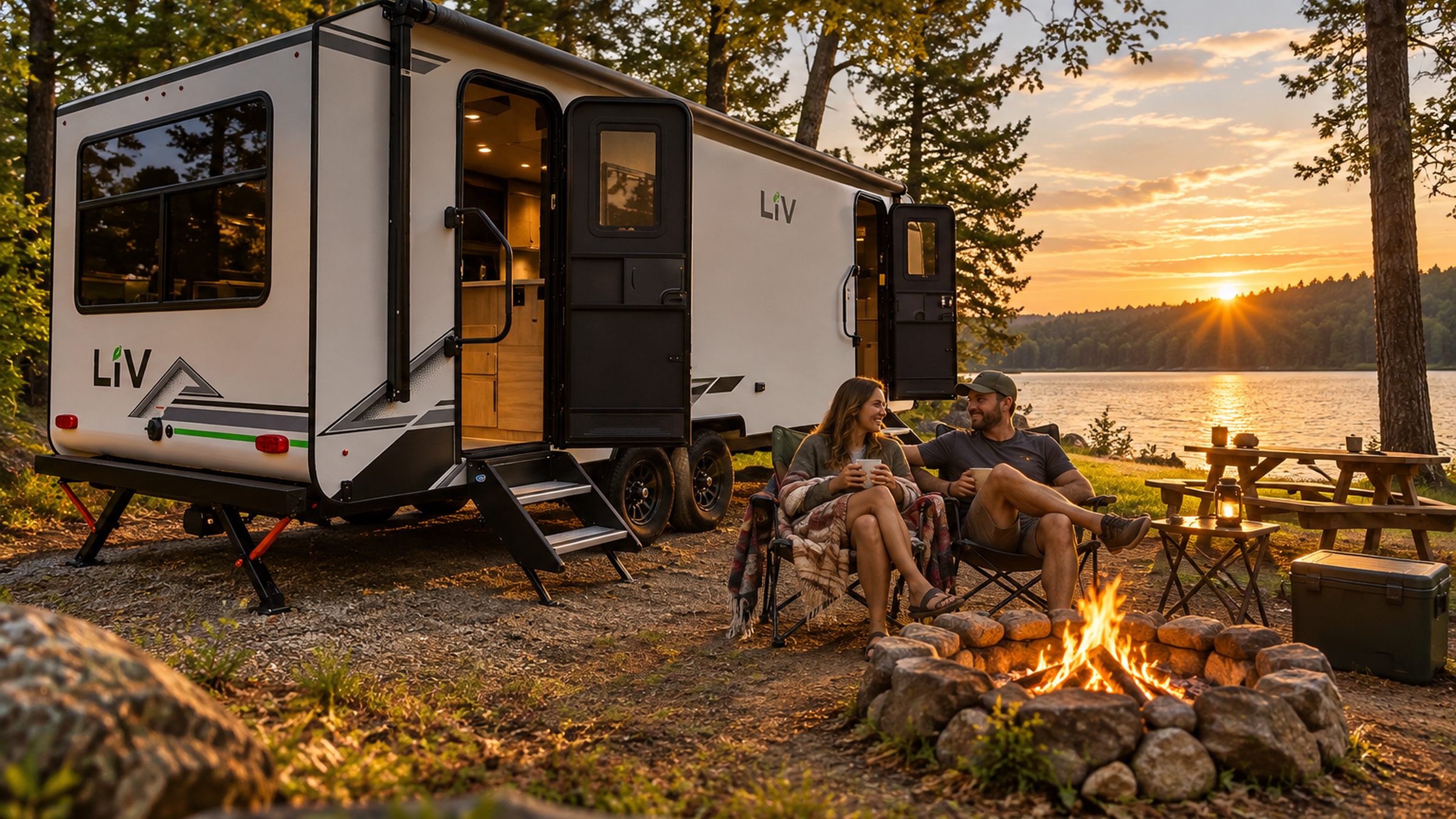
Choose a travel trailer if you want more room, more sleeping capacity, or the freedom to unhitch and drive your vehicle around once you are set up at camp. Because every LiV is 100% thermoplastic composite instead of heavy wood, our trailers weigh hundreds of pounds less than comparable wood-framed campers — the 13-series starts around 1,870 lbs dry, light enough for many crossovers and SUVs. Families especially tend to prefer a trailer for the extra space. See the full lineup, or read how to choose a lightweight travel trailer.
When a truck camper makes sense
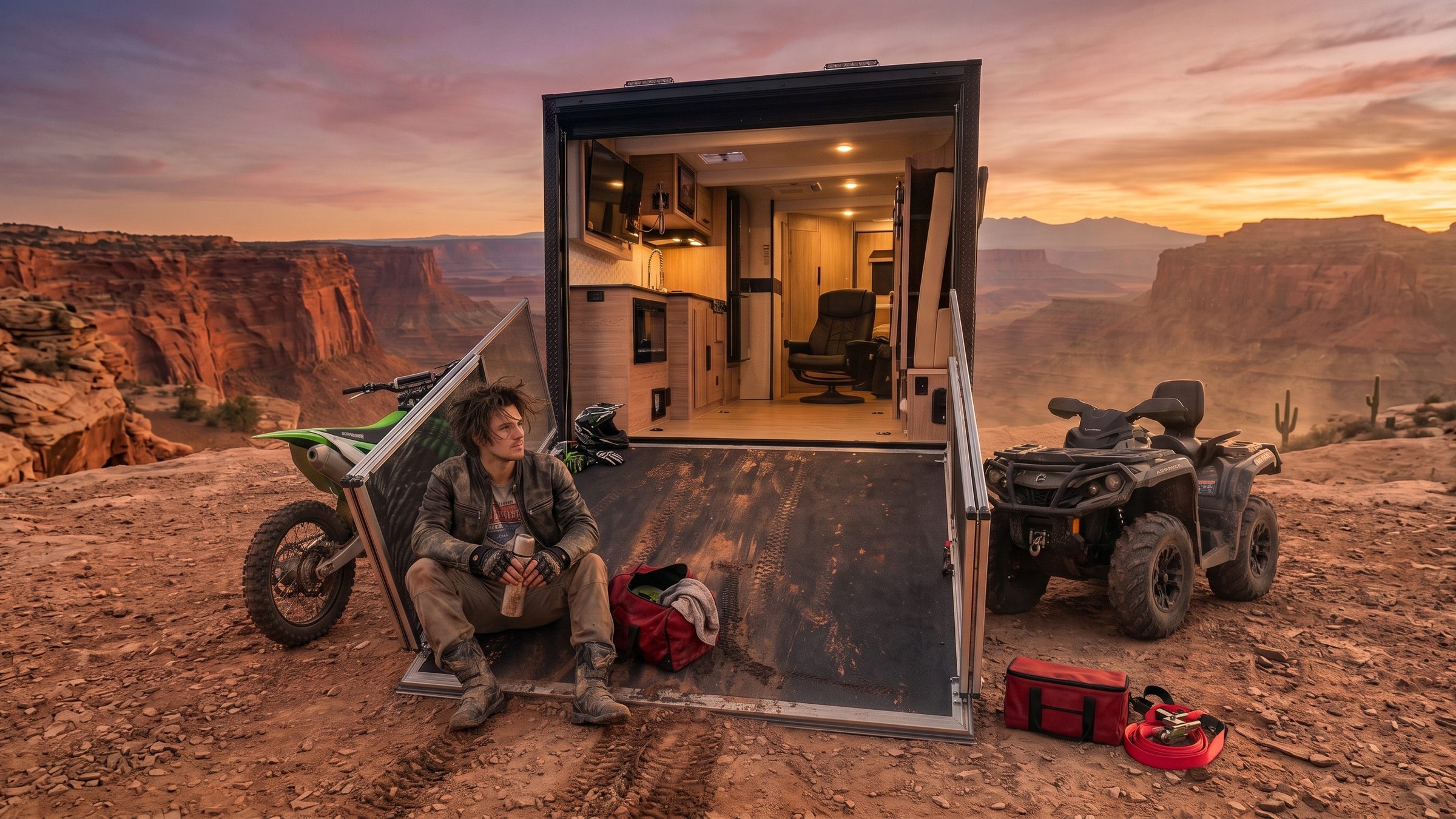
Choose a truck camper if you already own a pickup and want to go where trailers cannot easily follow — tight forest roads, remote trailheads, and spots with no room to maneuver a trailer. Because it rides in the bed, there is nothing to tow, back up, or unhitch. LiV builds two ultralight truck-bed campers, the OFF ROAD 129 and 159, on the same wood-free composite construction as the rest of the line.
What they share: wood-free construction
Whichever you choose, a LiV is built the same way: a welded, seamless, 100% thermoplastic composite shell with no wood to rot, backed by a lifetime warranty against wood rot and wood mildew. That matters even more off pavement, where water and rough roads punish traditional wood-framed rigs. Learn more in why travel trailers rot and how to avoid it.
Frequently asked questions
Is a truck camper cheaper than a travel trailer?
Not always — price depends on size and features more than on type. LiV builds ultralight truck campers (the OFF ROAD 129 and 159) and entry travel trailers (the 13-series) that both start in a similar affordable range, from under $20,000. Build either to see a personalized quote.
Do I need a special truck for a truck camper?
You need a pickup with a bed that fits the camper and enough payload capacity to carry it. LiV truck campers are ultralight, which widens the range of trucks that can carry them, but you should always confirm your truck payload rating before buying.
Can any SUV tow a LiV travel trailer?
Many can. The lightest LiV trailers weigh about 1,870 lbs dry, within reach of a lot of crossovers, minivans, and mid-size SUVs — but towing capacity varies by vehicle, so check your specific rating. See what can tow a LiV for a model-by-model guide.
Which is better for families?
For most families, a travel trailer is the better fit because it offers more living space and sleeps more people — bunkhouse floorplans sleep up to 8. A truck camper suits couples and solo travelers who value going remote over interior room.