Compare models
LiV 26 RBS vs 23 RBS
Two wood-free LiV travel trailers, side by side — here's how the 26 RBS and 23 RBS differ on space, weight, and price.
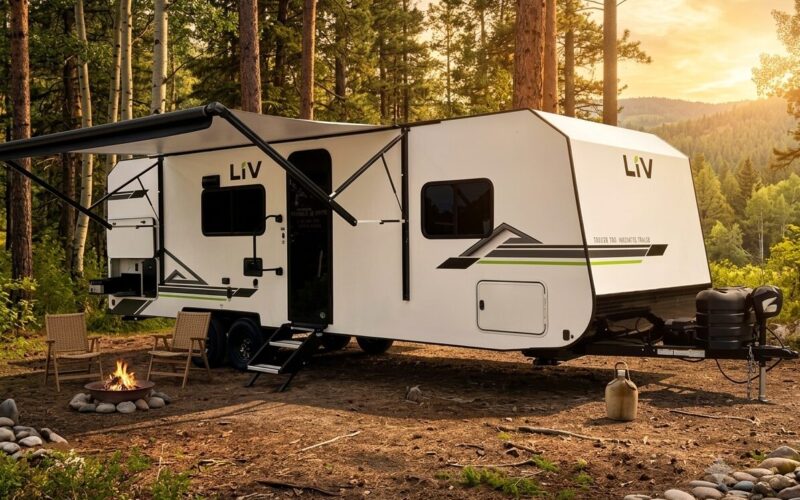
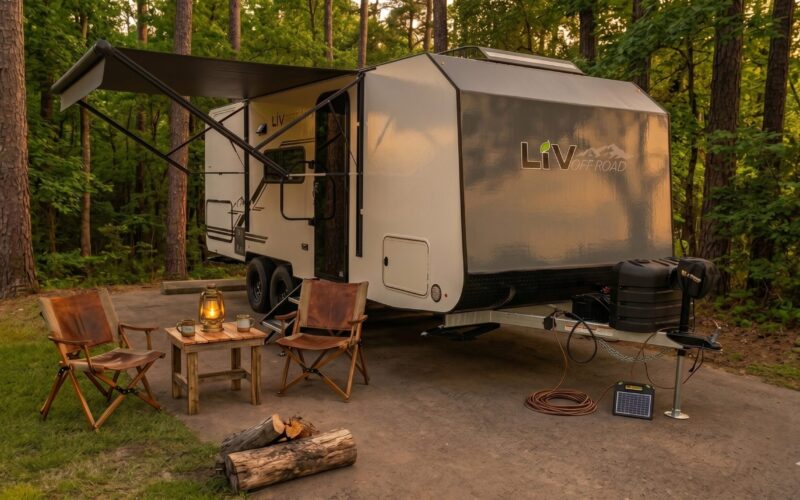
Side by side
Specs compared
| Spec | 26 RBS | 23 RBS |
|---|---|---|
| Layout | Rear bath | Rear bath |
| Sleeps | 6 | 4 |
| Length | 26 ft | 23 ft |
| Dry weight | 3,880 lbs | 3,880 lbs |
| GVWR | 4,990 lbs | 4,990 lbs |
| Cargo capacity | 1,420 lbs | 1,160 lbs |
| Fresh water | 35 gal | 35 gal |
| Grey water | 30 gal | 30 gal |
| Black water | 38 gal | 38 gal |
| Slide-outs | 1 slide | 1 slide |
| Electric service | 30 amps | 30 amps |
| Starting price | $41,000 | $38,000 |
Highlighted cells mark the more favorable figure. Prices are starting ballparks — configure a build for a closer number.
The bottom line
Which should you choose?
Pick the 26 RBS
if you want more sleeping capacity.
Pick the 23 RBS
if you want a shorter trailer to store and maneuver and a lower starting price.
Questions
Good to know
What is the difference between the 26 RBS and the 23 RBS?
Both are wood-free LiV travel trailers built on the same composite shell — see the spec table above for how they compare on weight, sleeping capacity, length, tanks, and price.
Which costs less, the 26 RBS or the 23 RBS?
The 23 RBS has the lower starting price, around $38,000 — a ballpark figure; configure a build for a closer number.