NOV · 16 · 2026
How to Keep Moisture Out of Your LiV in Storage (and When You’re Living In It)
To keep moisture out of a stored travel trailer, get rid of the water at its source, keep the air moving, and stop it from condensing on cold surfaces. In storage, that means a dehumidifier or moisture-absorbing tubs, a cracked roof vent, and open cabinets. Most of the “moisture” owners find in a closed-up trailer isn’t a leak at all. It’s condensation.
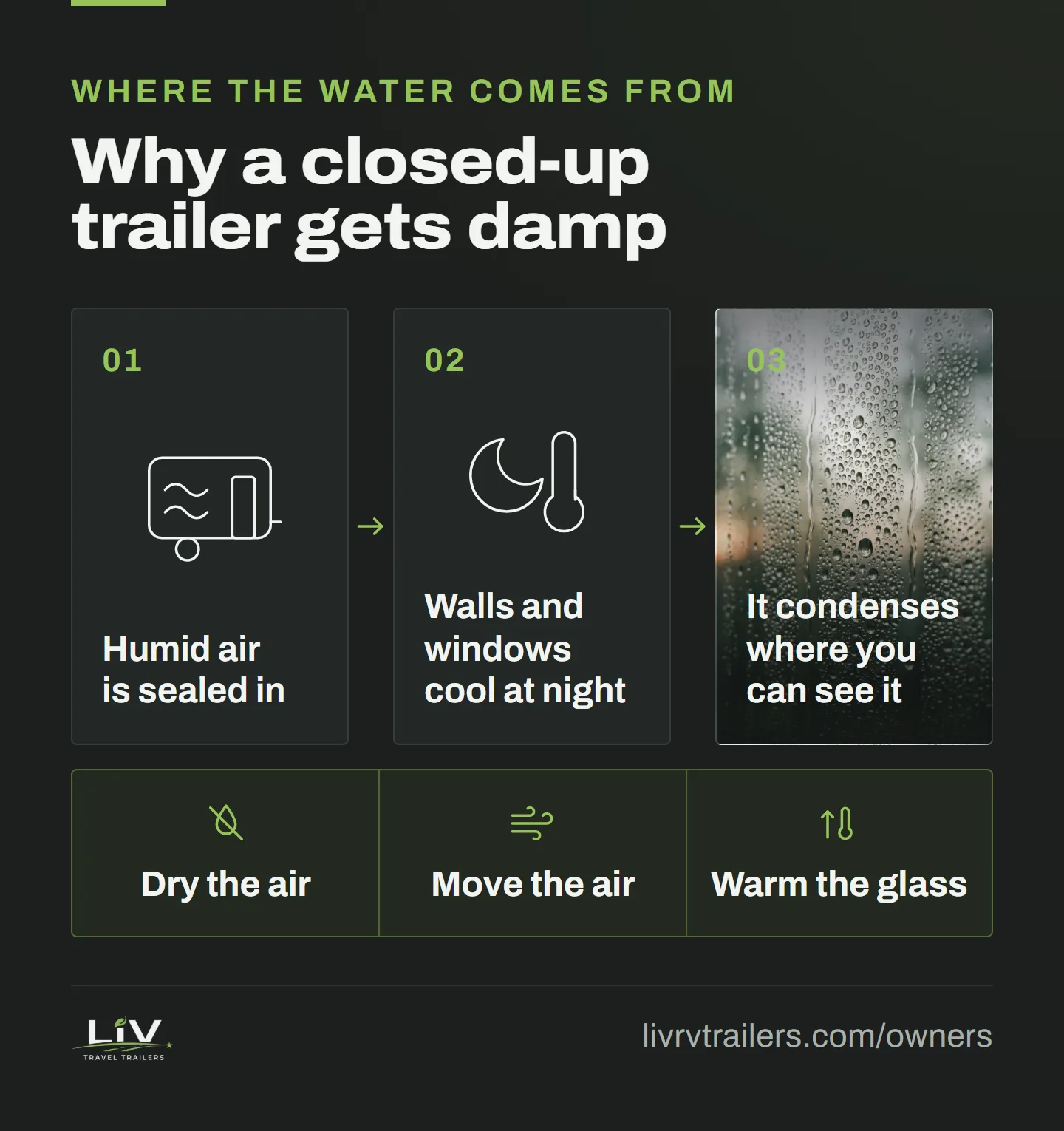
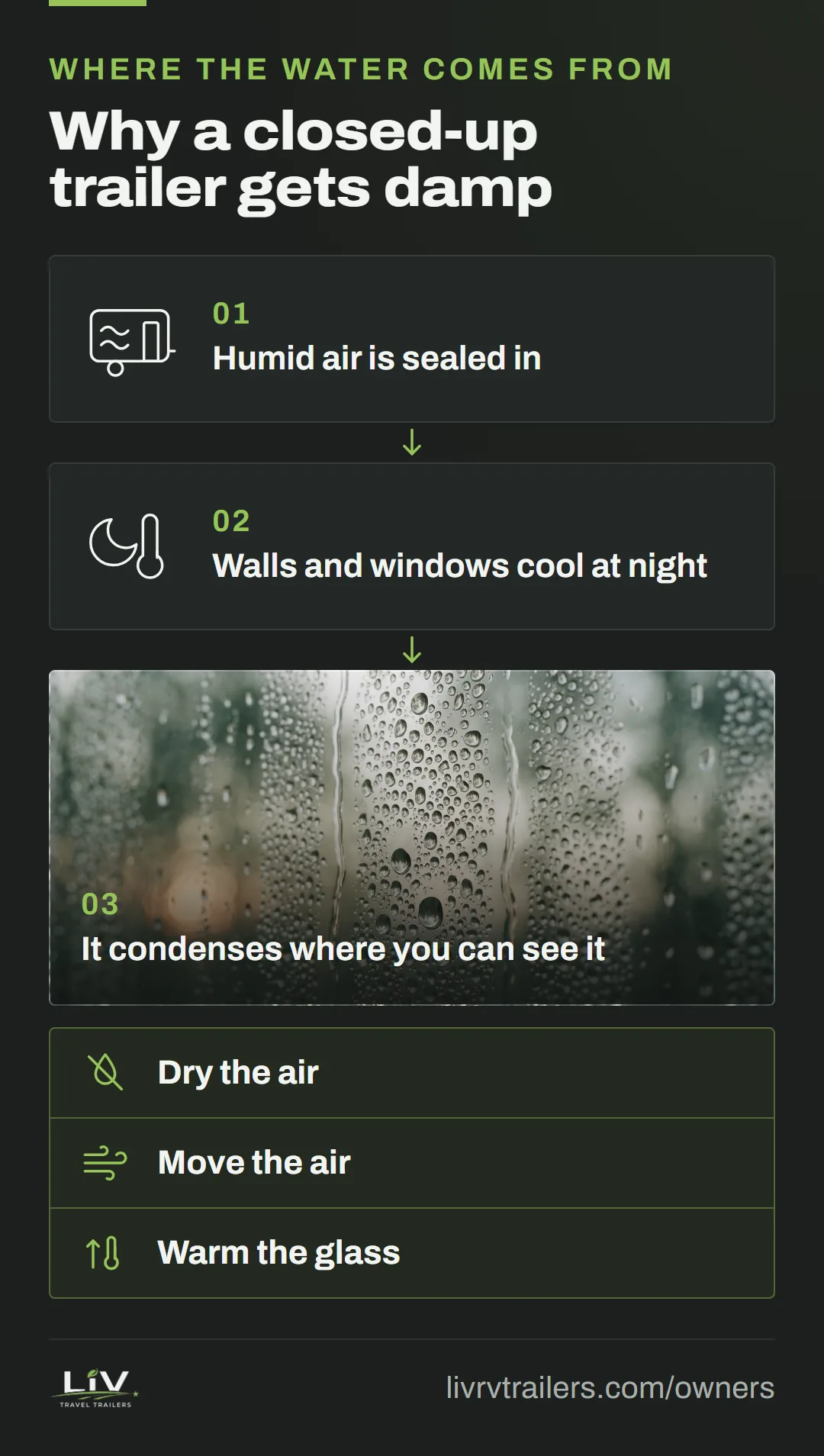
Why a closed-up trailer gets damp
When you close up your LiV for storage, whatever humid air is inside stays inside, and in the humid South that’s a lot of water. At night the walls, windows and roof cool down, and the water in the air condenses on them. A cold glass of tea sweats on a summer porch the same way.
A LiV is built as a 100% fiberglass reinforced box. There’s no structural wood in the walls, roof or floor to soak up that water and rot. The flip side is that the water doesn’t vanish into the walls the way it does in a wood-paneled trailer. It beads up where you can see it: on windows, on wall panels, inside cabinets. That’s good news, because you can catch it early. It also means the air inside needs looking after. Cushions, bedding, cabinets and anything you leave inside can still get damp and grow mold.
Storing your LiV: the checklist
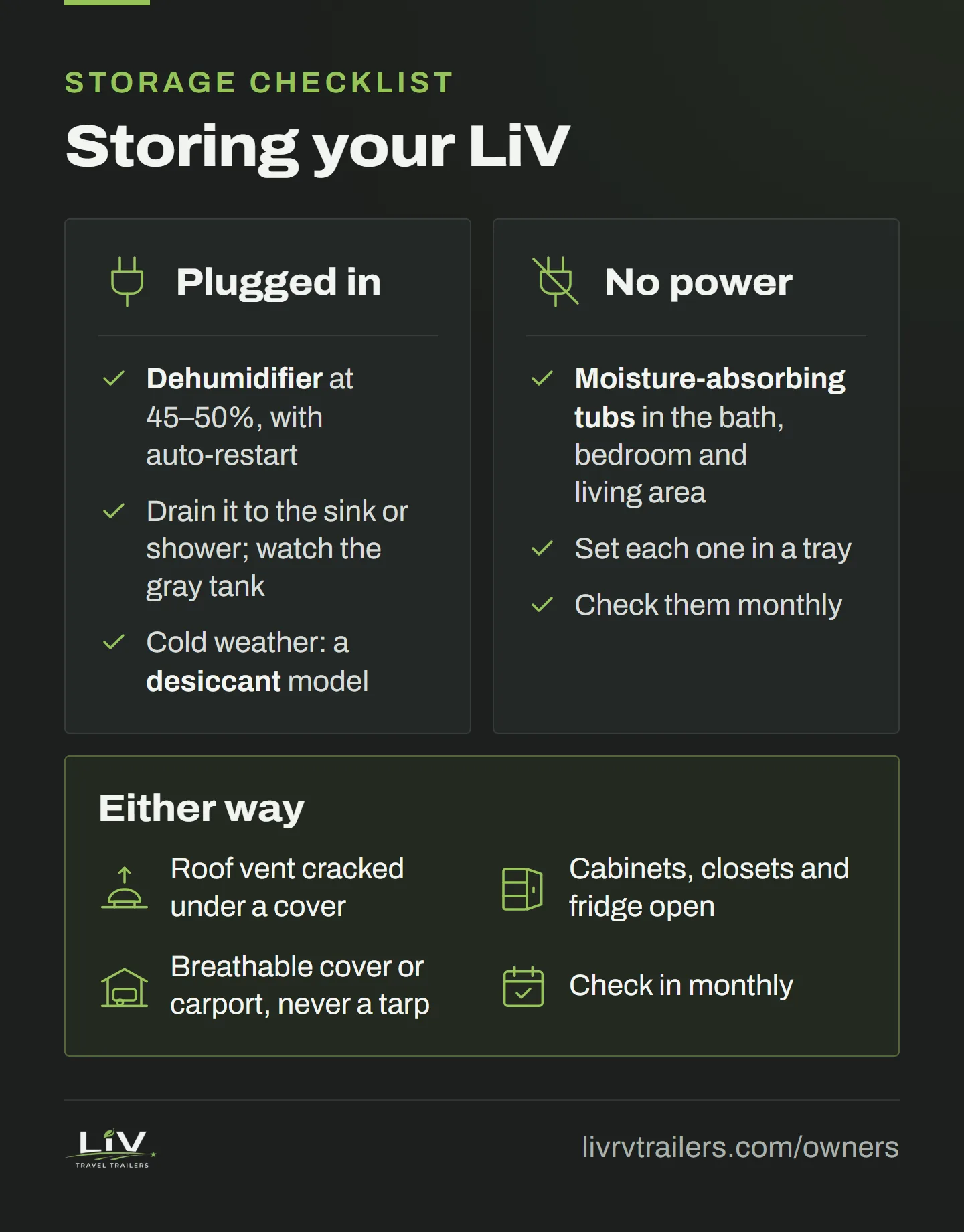
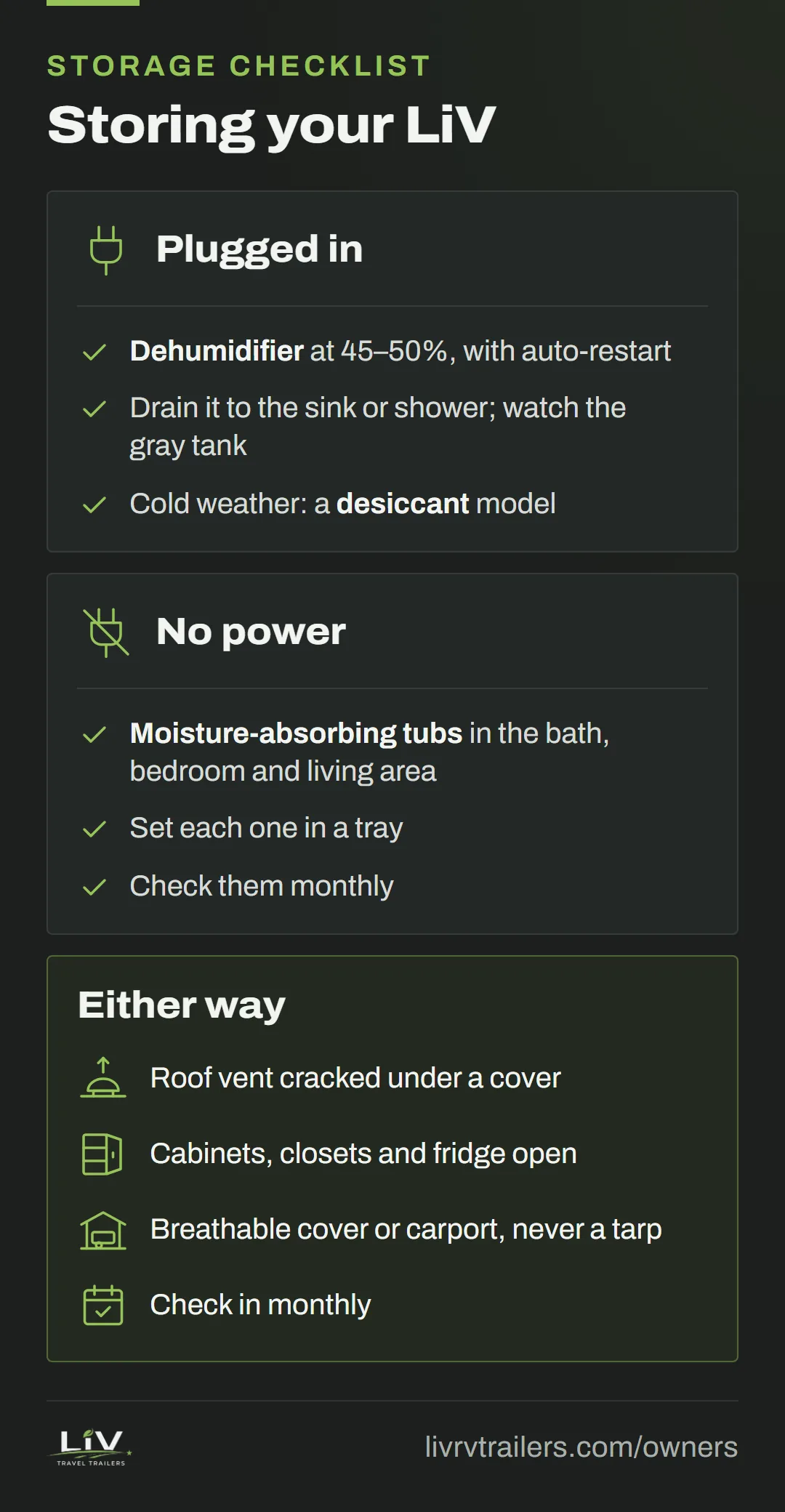
If you have shore power
- Run a dehumidifier. Nothing else does as much. A small compressor unit rated around 20–35 pints a day is plenty for a LiV. Set it to 45–50% and pick one with auto-restart, so it comes back on after a power outage.
- Let it drain on its own. Run the drain hose into the sink or shower. That water goes into your gray tank, and in humid weather a dehumidifier can pull a gallon or more a day. Check the tank level when you visit, or connect a sewer hose and leave the gray valve open.
- In cold weather, use a desiccant dehumidifier. Compressor models slow down below about 60–65°F and can frost up. Desiccant models keep working in the cold.
If you don’t have power
- Use moisture-absorbing tubs such as DampRid in the bathroom, the bedroom and the living area. Set each one in a bowl or tray, because the salty liquid it collects can damage surfaces if it tips. Check them monthly. In a humid summer they fill fast.
Either way
- Crack a roof vent under a vent cover. The cover lets you leave the vent open rain or shine, so moist air has a way out.
- Open everything up inside. Prop open the cabinets, closets, drawers and refrigerator door. Take bedding and towels home, or stand cushions on edge.
- Cover it the right way. A breathable RV cover or a carport keeps the sun and rain off. Never wrap a trailer in a plastic tarp, because that traps moisture against it.
- Check in once a month. Open the door and notice the smell. Look at the windows and cabinet corners, empty the tubs, and read the humidity.
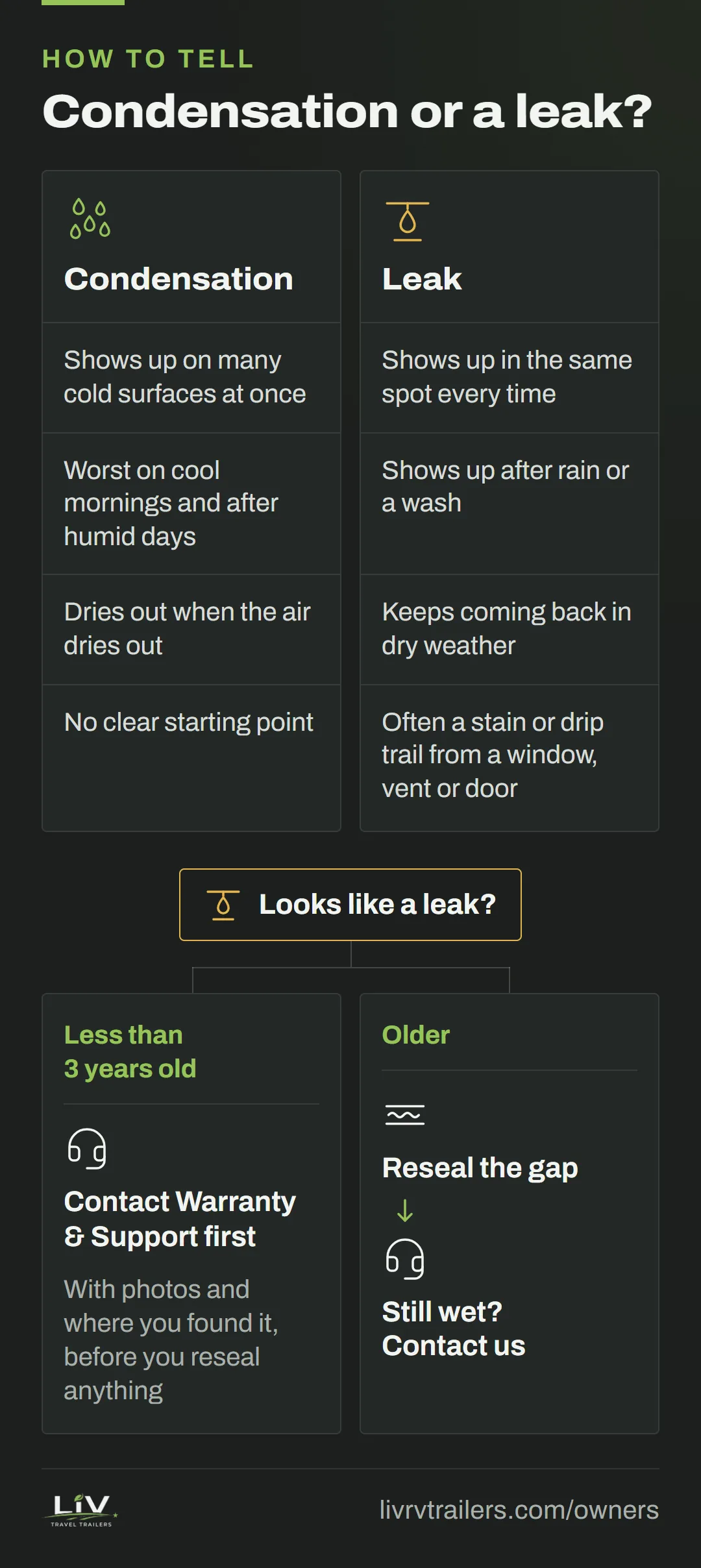
Condensation or a leak? How to tell
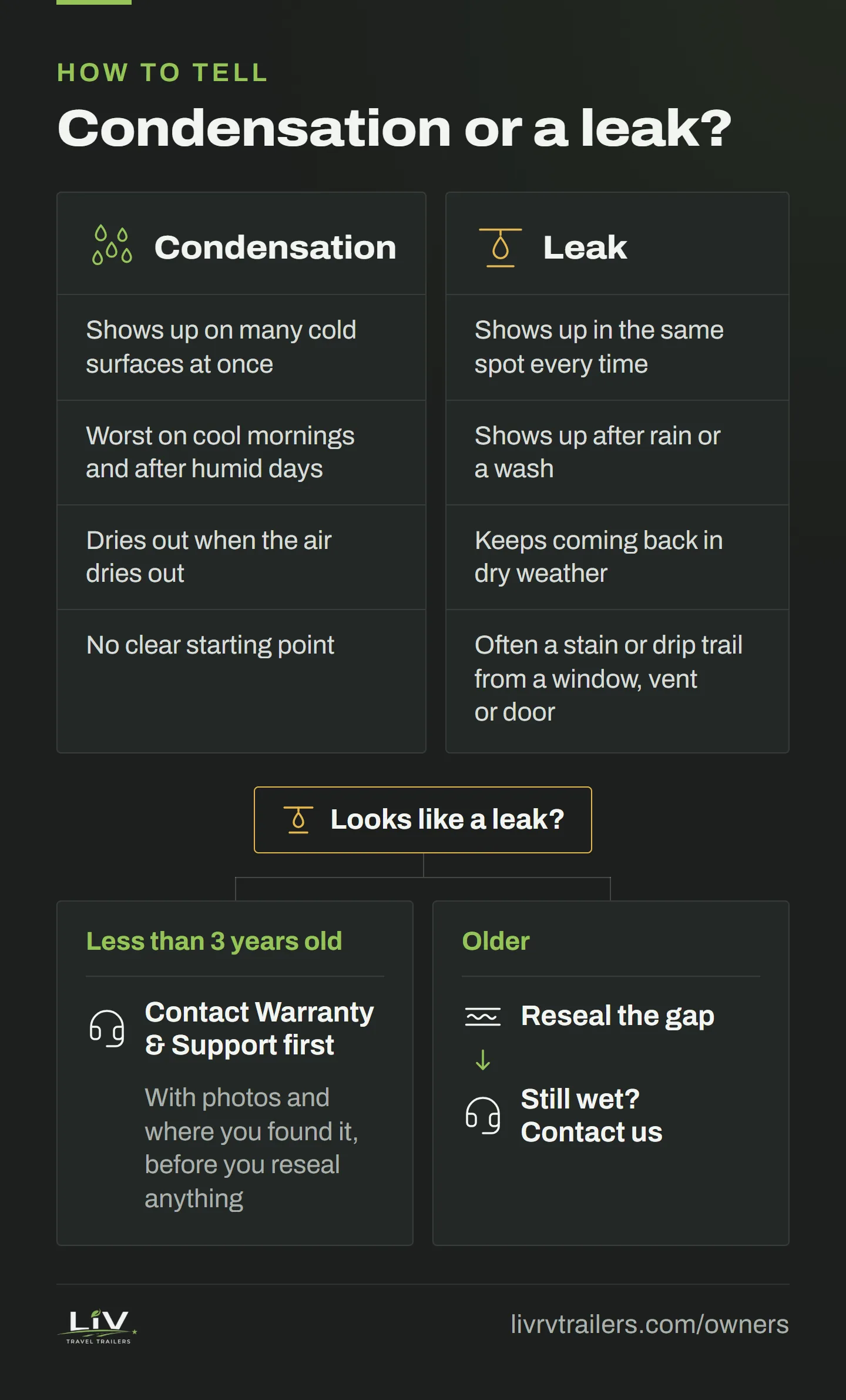
| Condensation | Leak |
|---|---|
| Shows up on many cold surfaces at once | Shows up in the same spot every time |
| Worst on cool mornings and after humid days | Shows up after rain or a wash |
| Dries out when the air dries out | Keeps coming back in dry weather |
| No clear starting point | Often a stain or drip trail from a window, vent or door |
If it looks like a leak and your LiV is less than 3 years old, contact Warranty & Support first, with photos and where you found it, before you reseal anything. It may be covered under warranty. If it’s older, check the seals closest to it (see the next section) and reseal any gap you find. If water still gets in after that, contact us.
Check your seals twice a year
Every LiV passes a Seal-Tec watertight test before it leaves the plant. Seals still age with sun, heat and miles, so give them a look each spring and fall:
- roof vents, the A/C, and anything else mounted on the roof
- window and door gaskets
- exterior compartment doors
- slide-out seals, if your model has a slide
Look for tape edges that are lifting, sealant that is cracked or pulling away, gaskets that are torn, or daylight around a closed door.
Found a gap? If your LiV is less than 3 years old, contact Warranty & Support first, with photos, before you reseal anything. It may be covered under warranty. If it’s older, reseal it. On the roof, clean the spot and cover it with self-leveling lap sealant. Around windows, doors and compartments, use an RV-rated non-sag sealant. Skip household silicone, because new sealant won’t stick to it later. Still getting water after you reseal? Contact Warranty & Support with photos and where it’s coming in.
If you’re living in it, especially when it’s cold
Two people breathing, cooking and showering can put a gallon or more of water into the air in a day. On a cold night it ends up on the coldest surfaces: the windows, the walls behind cabinets, and the corners.
- Run a dehumidifier set to 40–50%.
- Vent the steam. Open the roof vent, and run its fan if it has one, whenever you cook or shower. Leave it open 15–20 minutes after a shower.
- Cook outside or on induction when you can. Every pound of propane a stove burns puts about a pound and a half of water vapor into the air. An outdoor kitchen, if your model has one, or a plug-in induction plate keeps that water outside.
- Never use a vent-free propane heater inside. Catalytic and “vent-free” heaters put water vapor and carbon monoxide straight into the trailer. They’re one of the biggest causes of soaked RVs. For dry heat, use your furnace (it vents outside), your heat pump if your model has one, or an electric space heater on shore power. Keep your CO and LP alarms working.
- Crack a vent or window about an inch while a fan runs on low. Moist air goes out and drier air comes in. The bit of heat you lose is worth it.
- Give the air room behind things. Leave closet and cabinet doors cracked, and keep mattresses and cushions an inch or two off the outside walls. A mattress on a solid platform needs a breathable underlay such as HyperVent, or mold can grow underneath it.
- Insulate the windows. Use shrink-film kits or foil-backed panels on windows you don’t look out of, and put a vent cushion in the roof vent opening.
- Wipe the windows each morning with a squeegee or microfiber towel, so the water doesn’t sit on the frames.
Warning signs
- a musty smell when you open the door
- water stains in cabinet corners or on the ceiling
- damp or spotted cushions, bedding or curtains
- water collecting in the same spot every visit
If you see any of these, run through the condensation-or-leak check above.
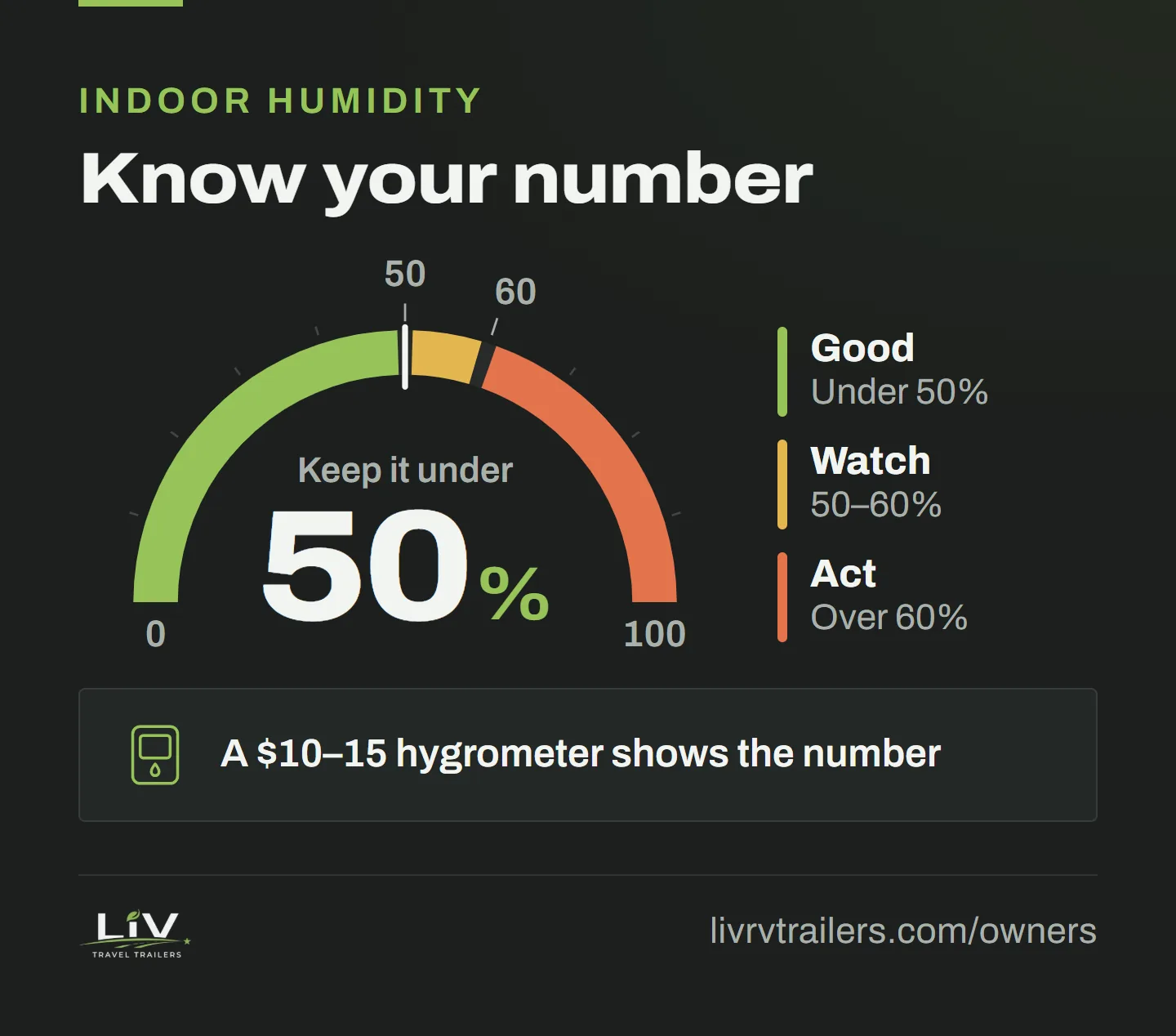
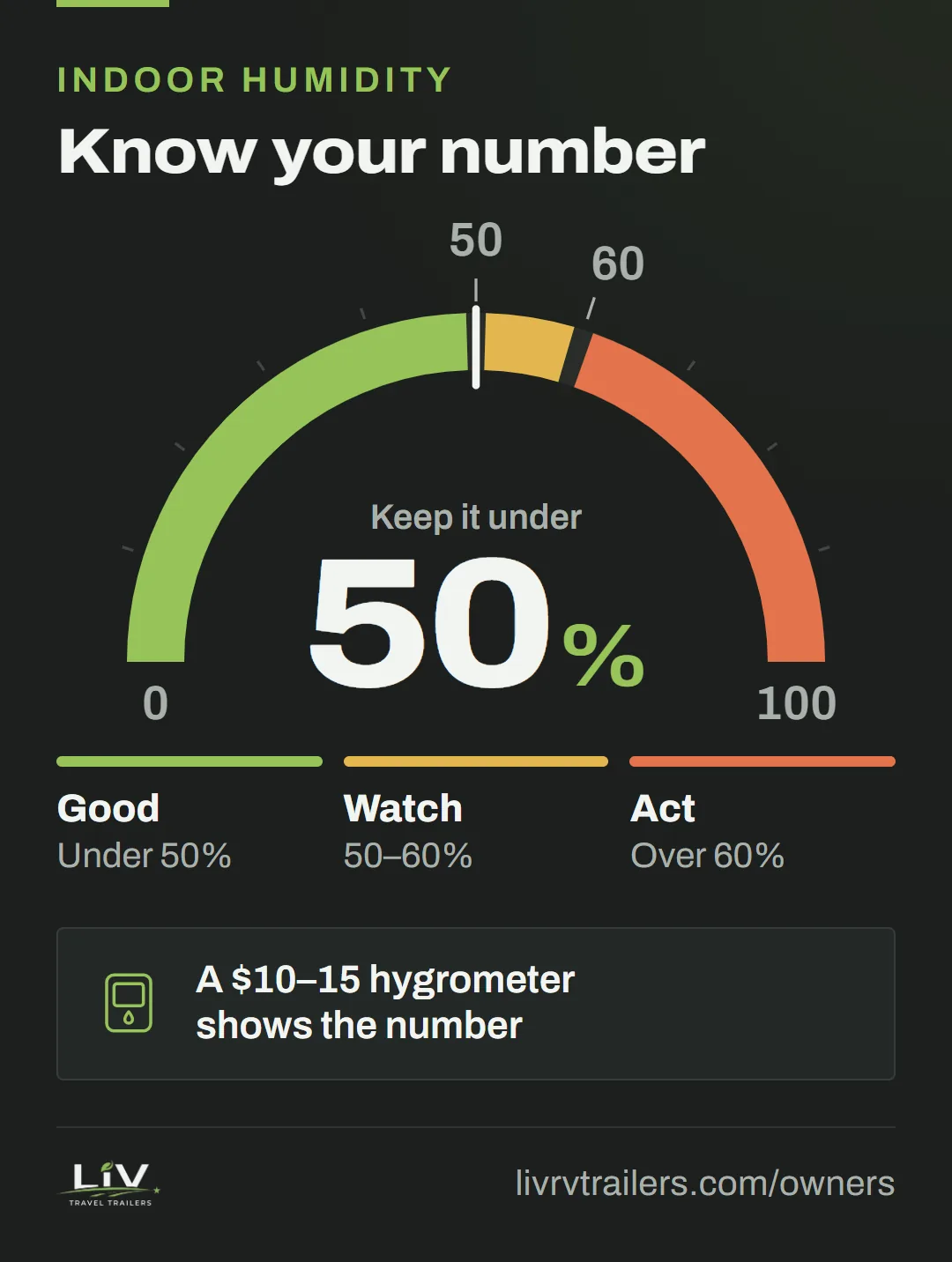
Know your number: under 50%
A small digital hygrometer costs $10–15 and shows the humidity inside. Keep it under about 50%, and check it every time you visit. Some models record the highest reading since you last looked, which is handy for a trailer that sits for weeks.
Frequently asked questions
Why is there water inside my stored travel trailer?
Usually it’s condensation. Humid air trapped in a closed trailer condenses on the walls and windows when they cool at night. A leak shows up in the same spot after rain and keeps coming back in dry weather.
What humidity should I keep my trailer at in storage?
Under about 50%. A dehumidifier set to 45–50%, or moisture-absorbing tubs, plus a cracked roof vent will hold most trailers there.
Should I run a dehumidifier in a stored travel trailer?
Yes, if it has shore power. Pick one with auto-restart and drain it into the sink or shower, keeping an eye on the gray tank. In cold weather a desiccant model works better.
Can a LiV rot from condensation?
The walls, roof and floor have no wood to rot. Condensation can still affect what’s inside, like cushions, bedding, cabinets and anything you’ve stored, which can get damp and grow mold. That’s why the humidity matters.
Is condensation on the walls of a fiberglass trailer normal?
Yes, in humid or cold weather. Fiberglass doesn’t soak up water, so it beads where you can see it. Wipe it off and bring the humidity down so it doesn’t sit.
Should I cover my trailer in storage?
Use a breathable RV cover or a carport. Never use a plastic tarp.
What should I do if I think my LiV is leaking?
If your LiV is less than 3 years old, contact Warranty & Support first, with photos and where you found it, because it may be covered under warranty. If it’s older, check the seals closest to the wet spot and reseal any gap: self-leveling lap sealant on the roof, RV-rated non-sag sealant on the sides. If water still gets in, contact us.
More owner help, including winterizing, seal checks and warranty, is in Owner’s Info.